
Precision manufacturing
Precision manufacturing, pursued to perfection.
- Steps
- 4
- Balancing
- G2.5
- Press accuracy
- ±0.5% F.S.
- Standard
- GB/T 9239.11
Precision assembly, pursued to perfection.
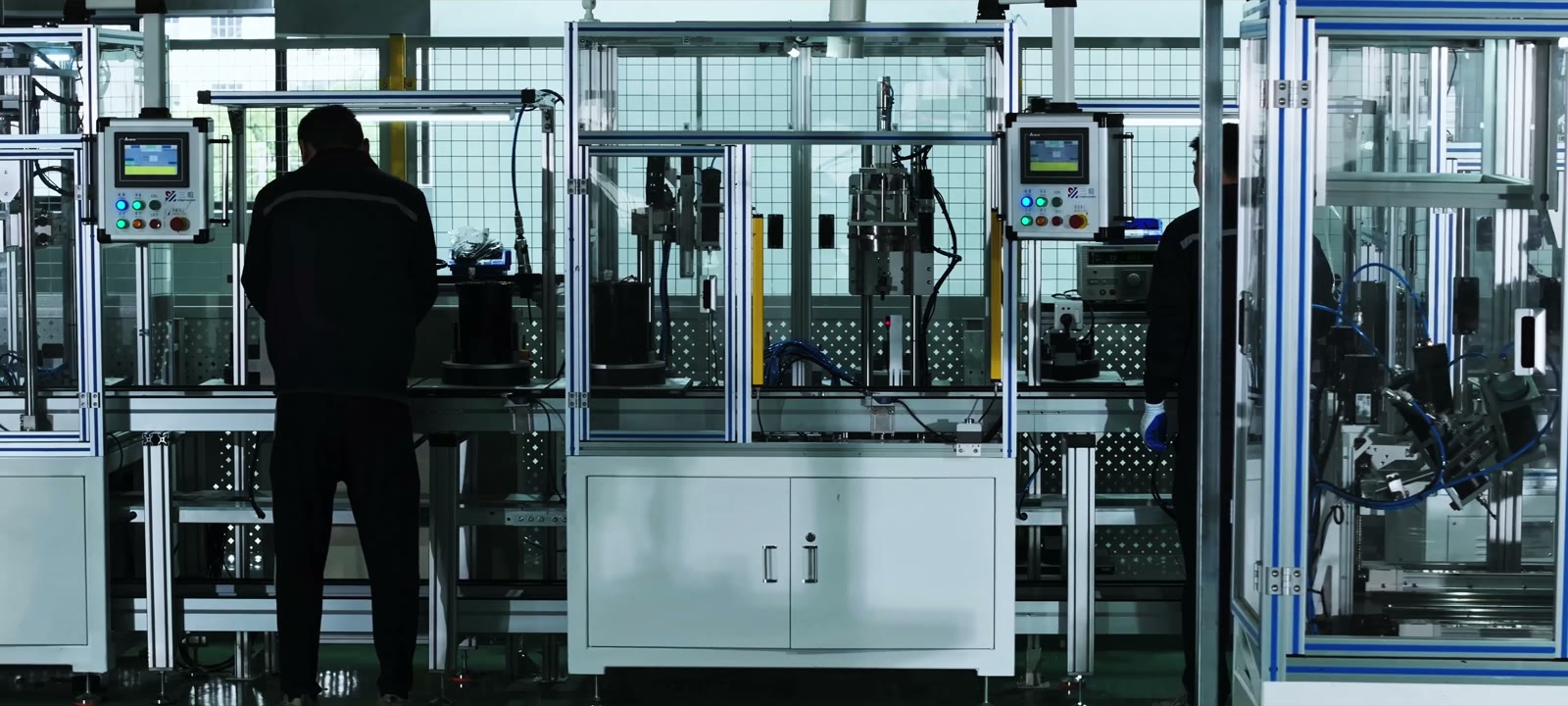
Rotor balancing, vacuum potting, post-potting machining and servo press assembly follow the production sequence, supporting vibration control, heat transfer, assembly accuracy and long-term stability.
01Rotor dynamic balancing
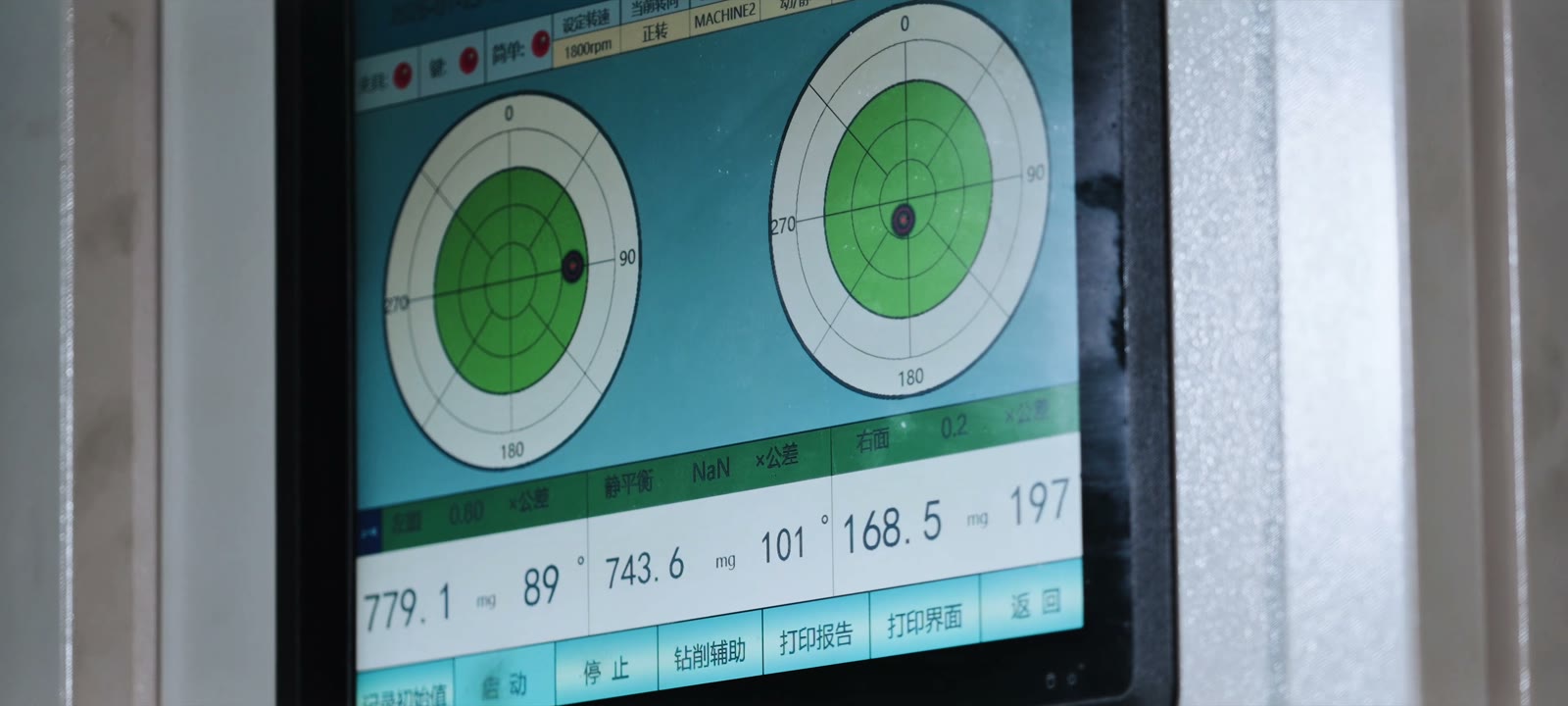
GB/T 9239.11G2.5C
Suppresses vibration and noise, extends bearing life
Rotor balancing machines from a leading domestic maker, working to GB/T 9239.11. Ventilation equipment is a continuously running load, and residual rotor unbalance converts directly into sustained radial bearing load — this step determines the state of the bearings years later, not the noise reading on the day of shipment.
02Vacuum potting
C
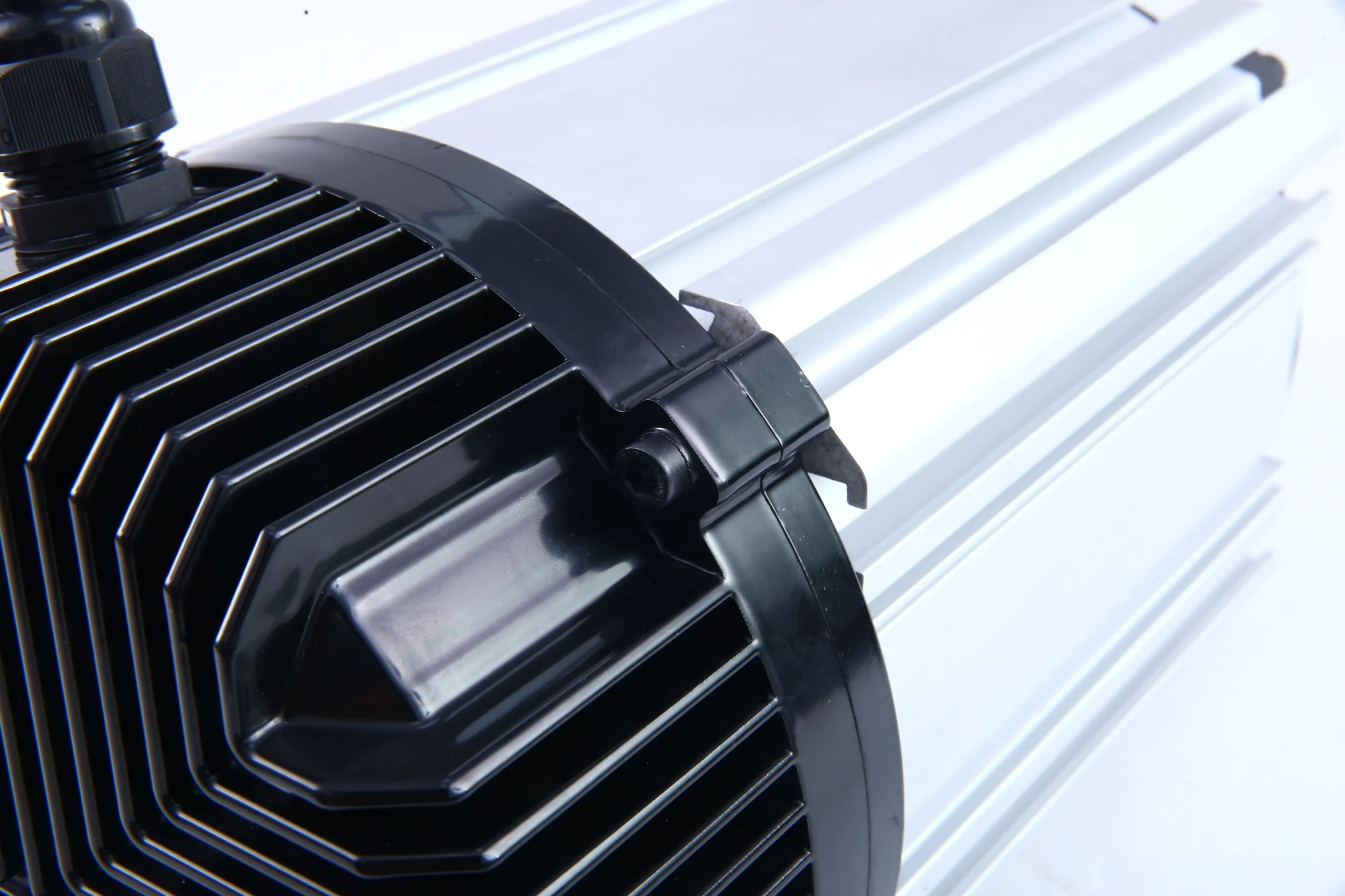
Cuts thermal resistance, slows insulation ageing
Near-absolute-vacuum potting, reaching virtually bubble-free encapsulation. A high-thermal-conductivity compound markedly reduces thermal resistance from winding to frame — a bubble is a dead spot for heat, and one left in the winding becomes a permanent hot point, while insulation ageing is acutely temperature-sensitive. Under negative-pressure duty, where cooling airflow is already falling away, this layer matters more.
03Post-potting finish machining
C
Locks concentricity and a uniform air gap
Machining after potting controls frame fits, rotor-to-stator concentricity and axial accuracy. The sequence can correct potting-related changes on machined surfaces; actual air-gap uniformity still requires inspection records.
04Servo press assembly
±0.5% F.S.C
Controlled assembly force; record retention to confirm
The film script states force control to ±0.5% of full scale for rotor-stator assembly. Servo equipment can record force-displacement data, but whether Rasta retains a record for every unit, and for how long, still requires factory confirmation.
Why potting comes before machining
The corporate-film script records potting before finish machining. Machining controls housing fits, rotor-to-stator concentricity and axial accuracy; actual dimensions and air-gap uniformity remain subject to inspection records.
- 01Rotor dynamic balancing
- 02Vacuum potting
- 03Post-potting finish machining
- 04Servo press assembly
Key process parameters and validation records
G2.5 and ±0.5% F.S. come from the script, and the process footage is real, but their applicable scope and measurement records were not supplied. This page therefore describes process capability, not a product-wide guarantee.
- CWhich product models and speeds G2.5 covers, and whether every unit is recorded or sampled
- CWhether force-displacement curves are retained, and for how long
- CVacuum level, compound type and curing conditions for potting
- CHow air-gap uniformity is controlled and recorded
One redacted example of each is needed. With them this page moves from "this is how we do it" to "here is the record" — which is where the manufacturing section actually differentiates.